By Eric Halston
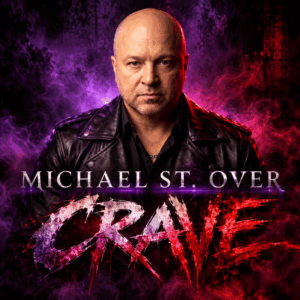
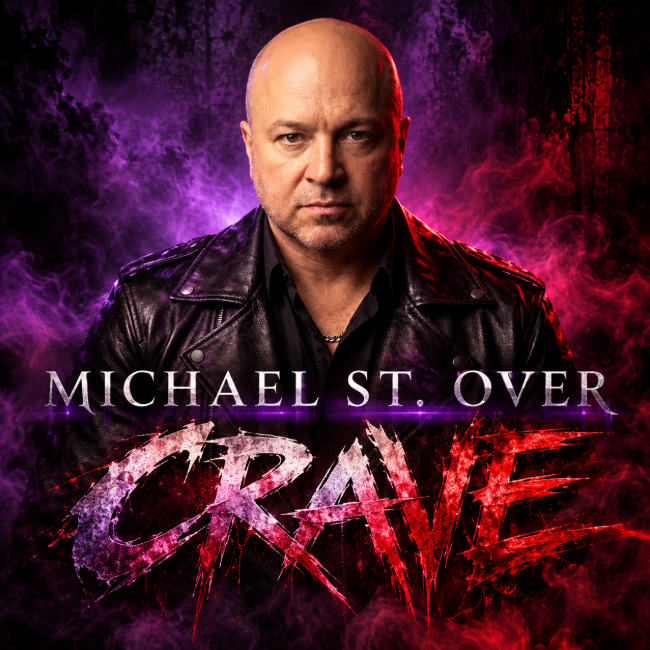
Michael St. Over’s “Crave” has one idea, and unlike plenty of rock singles with one idea, it knows exactly what to do with it.
The idea is simple: desire is a drug.
Not metaphorically complicated. Not psychologically subtle. Not especially new. Rock musicians have been confusing lust with chemical dependency since somebody first discovered that a distorted guitar could make bad decisions sound heroic.
The difference is that St. Over doesn’t pretend otherwise.
“Crave” is not interested in reinventing desire. It wants to amplify it.
The song opens with the kind of line that would get laughed out of a poetry workshop and cheered in a club: “I was born to love you baby / You were born to drive me crazy.” That tells you most of what you need to know. This is not the vocabulary of restraint. It is the vocabulary of people who make regrettable choices after midnight and call them destiny the next morning.
Which is to say: rock and roll.
St. Over builds the track around dependency language—wanting, needing, craving, jonesing—and keeps hammering until the metaphor becomes less decorative than structural. The song doesn’t merely compare romantic obsession to addiction; it moves like addiction. Verse, anticipation, release, repeat. The chorus arrives like the fix the song has been promising.
That is efficient songwriting.
It also helps that “Crave” understands the value of guitars that sound like they expect to be heard at unreasonable volume. The production is thick and modern without becoming anonymous, and the arrangement leaves enough space around the central hook that you actually remember what the song is called after it ends.
You would be surprised how many contemporary rock singles fail this basic test.
St. Over’s vocal performance does most of the heavy lifting. He is not selling tenderness here. He is selling compulsion. There is a slight edge of desperation in the delivery that keeps the lyrics from turning into cartoon machismo. The narrator may think he is in control, but the whole song suggests otherwise.
That tension is the track’s best feature.
Because let’s be clear: “Crave” could have been ridiculous.
A song this committed to love-as-drug imagery is always one badly delivered line away from sounding like a cologne commercial. St. Over avoids that trap by refusing to prettify the subject. Desire here is not presented as noble. It is needy, physical, repetitive, unreasonable, and occasionally humiliating.
In other words, recognizable.
There is also no fashionable irony protecting the song. St. Over does not step outside the feeling and wink at the audience. He goes straight through it. That sincerity is risky, especially in hard rock, where borrowed swagger often passes for personality.
Here, the lack of distance works.
“Crave” is not revolutionary, but revolution is an overrated requirement for a three-to-four-minute rock song. What matters is whether the riff lands, whether the chorus sticks, whether the performance convinces you that somebody meant it.
This one checks all three boxes.
And if the central metaphor has been around the block a few thousand times, so has the electric guitar. Nobody sensible is asking either one to retire.
St. Over’s trick is to take familiar materials—lust, obsession, volume, repetition—and push them hard enough to feel immediate again.
That is not genius.
It is craft.
And rock music could use more of it.