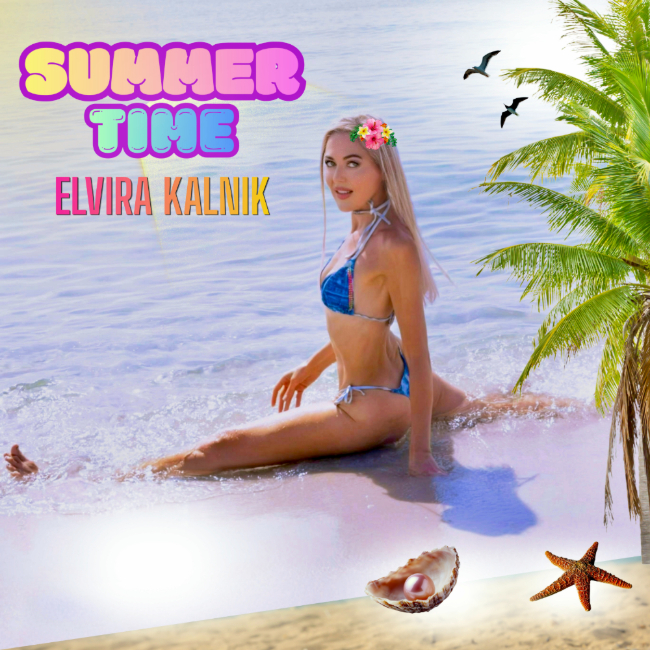
One of the recurring tensions within electronic dance music has always been the struggle between escapism and transcendence. Is dance music merely a temporary diversion from reality, or can it offer a genuine alternative state of being? On “Summer Time,” Elvira Kalnik lands firmly in the latter camp, creating a track that channels the utopian impulses that have powered rave culture since its earliest days.
Originally appearing on her 2017 album Magical Child, “Summer Time” feels less like a conventional summer anthem and more like a manifesto for emotional liberation. Its lyrical imagery—rainbow bubbles, unicorns, beach fires, dancing until sunrise—might initially appear whimsical, even naïve. Yet within the history of dance music, such imagery has a lineage. The song taps into the same idealistic current that ran through the Second Summer of Love, the PLUR (Peace, Love, Unity, Respect) ethos of early rave culture, and the collective yearning for joy that has repeatedly resurfaced throughout electronic music’s evolution.
Kalnik’s approach is notable because it refuses cynicism entirely.
Modern dance music often arrives layered with irony, commercial calculation, or a relentless pursuit of maximalist intensity. “Summer Time” instead embraces positivity as an aesthetic and philosophical choice. Its central message—that happiness is our natural state and that emotional freedom comes from releasing unnecessary burdens—aligns surprisingly well with dance music’s original promise of temporary self-transcendence.
Musically, the track draws from accessible dance-pop structures while maintaining a distinctly electronic sensibility. Bright synthesizers, buoyant rhythms, and an immediately memorable chorus create a sense of forward momentum. There is little interest here in underground credibility or experimental abstraction. Kalnik is pursuing something more universal: a soundtrack for collective release.
https://www.youtube.com/watch?v=_N6Ep0nxKBU
What separates “Summer Time” from disposable seasonal pop is its sincerity. The track’s invitation to “not be afraid of being silly” feels connected to a deeper psychological impulse. In rave culture, dancing has often functioned as a temporary suspension of social constraints—a space where participants could abandon self-consciousness and experience communal joy. Kalnik taps into that same emotional territory, albeit through a more playful and family-friendly lens.
Vocally, she delivers the material with enthusiasm rather than technical exhibitionism. Her performance serves the song’s emotional objective. Rather than dominating the arrangement, she becomes part of the atmosphere, guiding listeners into the world the song constructs.
The chorus is undeniably effective:
“Summertime, let’s go party, party,
Summertime, a fire on a beach…”
Repetition has always been one of dance music’s most powerful tools, not because it simplifies experience but because it intensifies it. Here, repetition transforms the chorus into something approaching affirmation—a recurring reminder to surrender to the present moment.
Viewed within Kalnik’s broader catalog, “Summer Time” reveals an artist consistently interested in emotional transformation. Whether exploring healing and introspection in later works like “Water Knows” or celebrating joy here, she remains focused on the relationship between inner freedom and self-expression.
In the end, “Summer Time” succeeds because it understands something that dance music has always known: happiness is not trivial. Joy can be profound. Freedom can be playful. And sometimes the most radical act is allowing yourself to feel good without apology.
Elvira Kalnik’s “Summer Time” is less about summer itself than about reclaiming a state of openness. Like the best moments in dance culture, it offers a temporary glimpse of a brighter emotional reality—and invites listeners to step inside.
–Ray Simons