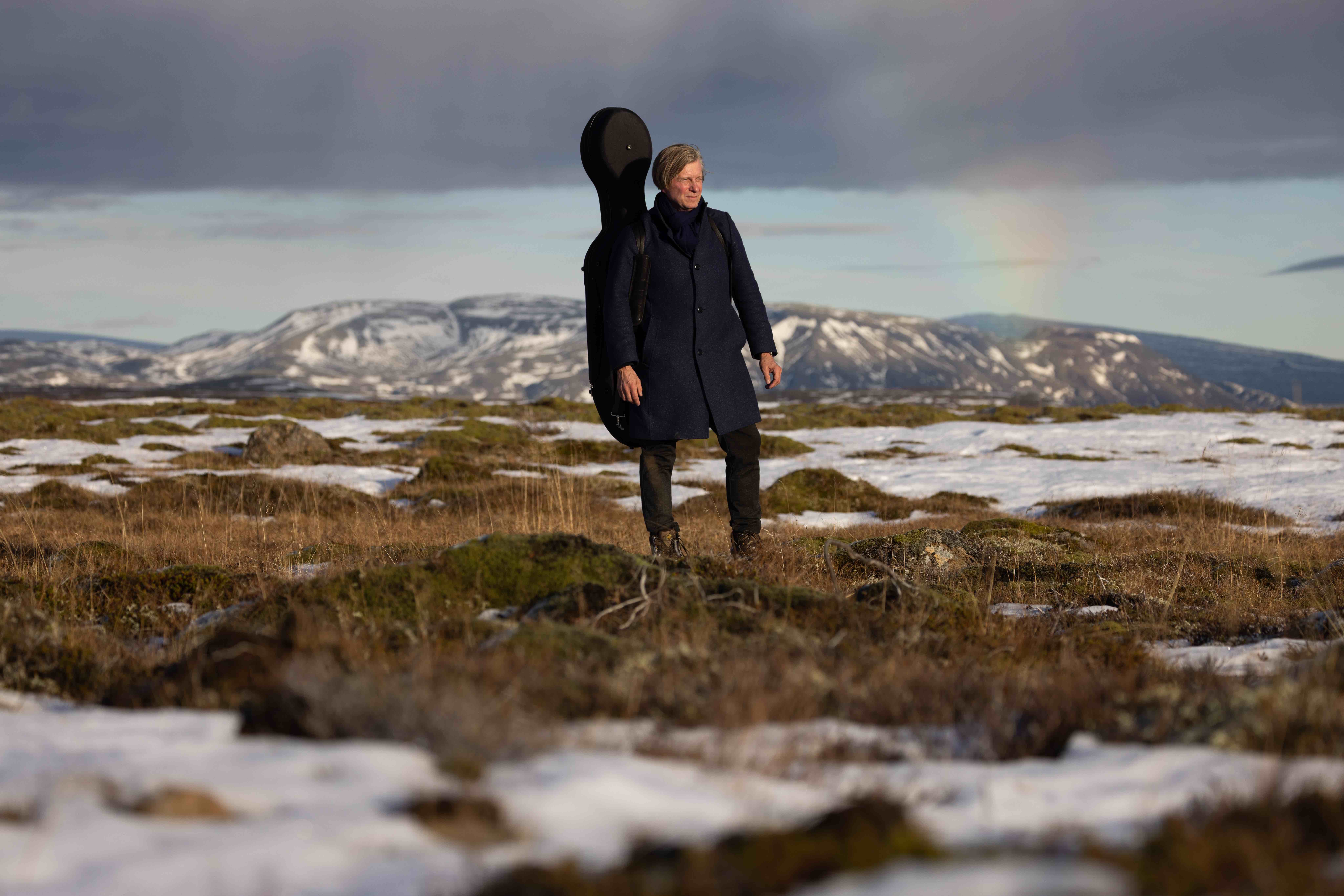
In an era dominated by constant noise, distraction, and endless digital stimulation, Icelandic composer and cellist Eythor Arnalds offers something increasingly rare with Music for Walking: stillness. Yet this is not music that sits motionless. Instead, Arnalds crafts a ten-track journey built around movement itself, transforming ambient composition into a deeply physical and emotional experience that unfolds one step at a time.
Released via Alda Music, Music for Walking occupies a space somewhere between contemporary classical music, cinematic sound design, and mindful meditation. Drawing influence from minimalist visionaries such as Max Richter, Ólafur Arnalds, Brian Eno, Nils Frahm, and Hildur Guðnadóttir, Arnalds delivers a record that feels familiar within the modern ambient landscape while maintaining a distinct voice rooted in Iceland’s vast natural beauty and contemplative spirit.
Recorded with the Reykjavík Symphony Orchestra at Harpa Concert Hall and produced alongside Grammy-nominated engineer Bergur Þórisson, the album possesses an extraordinary sense of scale without ever becoming overwhelming. Every note feels deliberate, every pause meaningful. Rather than relying on dramatic crescendos or cinematic excess, Arnalds allows subtle shifts in texture and repetition to carry the emotional weight.
At the heart of the record sits lead single “Progression,” perhaps the album’s most fully realised statement. Built around four delicate broken chords, the composition unfolds with remarkable patience. Soft harp and piano ostinatos provide a gentle pulse while drifting violin lines add warmth and motion. Gradually, Arnalds’ cello emerges from the arrangement, not as a dominant force but as a guiding presence, rising gently through the mix like a thought slowly taking shape. The result is breathtakingly understated, capturing a sense of personal evolution without uttering a single word.
The beauty of Music for Walking lies in its ability to mirror the rhythms of life itself. Tracks such as “Body of Water,” “Opening,” and “Promenade No. 7” move with the cadence of footsteps, encouraging reflection rather than demanding attention. There is a remarkable trust in the listener throughout the album. Arnalds never rushes a musical idea, instead allowing themes to breathe and develop naturally. The effect is immersive, creating a soundtrack not only for physical journeys but for internal ones as well.
The accompanying visual world enhances this experience further. The stunning video for “Progression,” directed by filmmaker and explorer Karim Iliya, captures Iceland’s glaciers, volcanic landscapes, and drifting icebergs with the same sense of awe and quiet wonder found within the music itself. The imagery serves as a natural extension of the album’s themes, reinforcing the connection between movement, transformation, and the passage of time.
What makes Music for Walking particularly compelling is its philosophy. Arnalds isn’t interested in offering easy resolutions or dramatic emotional peaks. Instead, the album embraces process over destination. The listener is invited to simply exist within the music, allowing thoughts to wander and emotions to surface naturally. In that sense, the record functions almost as a form of guided meditation, one that encourages presence without ever feeling prescriptive.
For listeners seeking explosive hooks or immediate gratification, Music for Walking may feel deceptively restrained. But those willing to surrender to its pace will discover an album rich with emotional depth and quiet beauty. It is a record that rewards patience, revealing new details and resonances with each listen.
With Music for Walking, Eythor Arnalds has created more than an ambient album. He has crafted a space for reflection, movement, and calm in an increasingly chaotic world. Deeply human, elegantly composed, and profoundly immersive, it stands as one of the most affecting contemporary classical releases of the year.