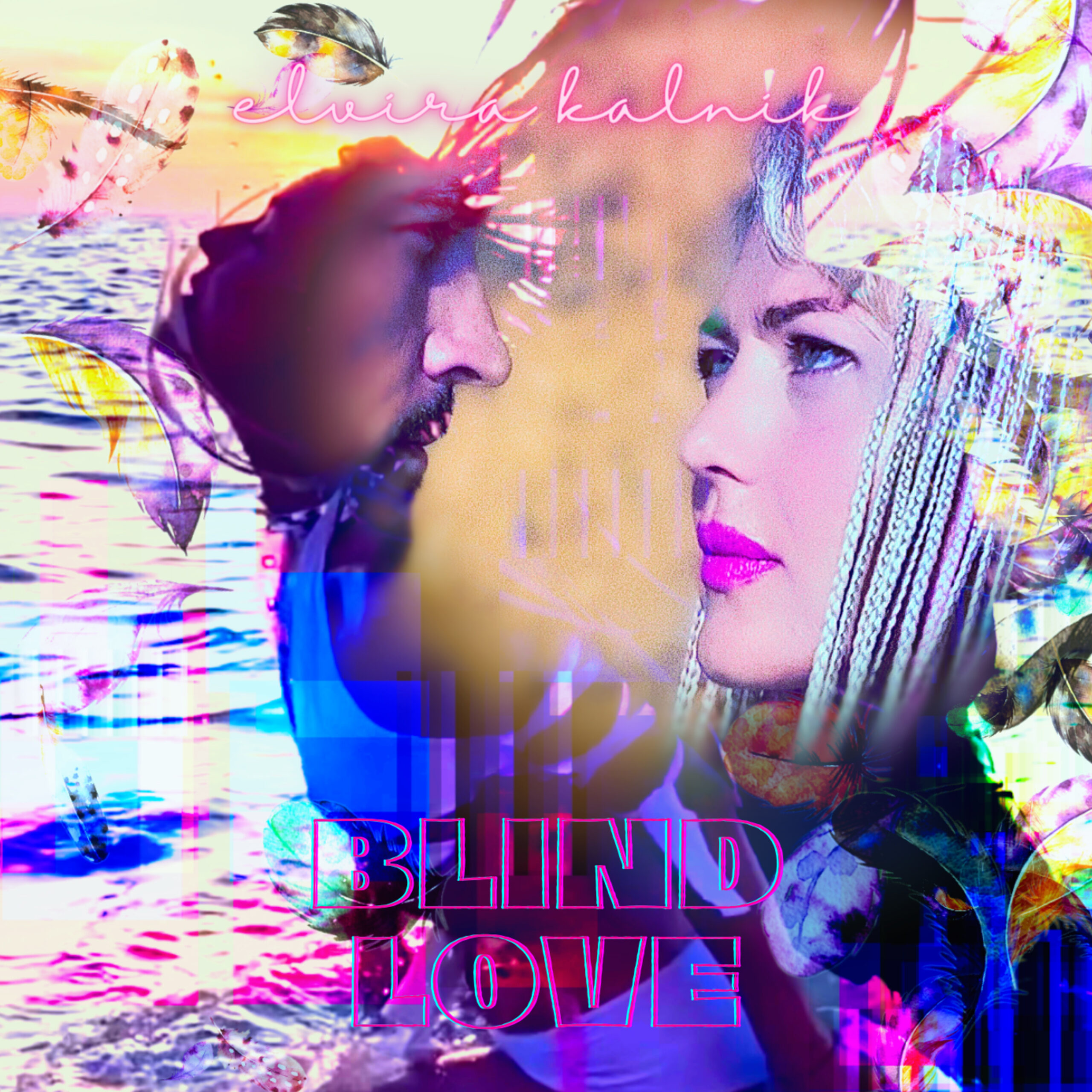
Elvira Kalnik’s “Blind Love” is built like an argument you can’t win, because it refuses to move forward. Its lyric is a closed circuit: one person delivers an ultimatum (“You can’t live anymore like that”), the other stalls (“I don’t know what to say”), and the chorus doesn’t resolve anything so much as document paralysis—“I can’t make a decision right away”—over and over until indecision starts to feel like a third character in the room. In pop, repetition is often a hook. Here it’s a symptom: the mind re-running the same moment, hoping a different answer will appear.
Elvira Kalnik’s writing pares language down to essentials—no backstory, no specific wrongdoing, no names for the feelings. That blankness is the point. When relationships hit the wall, explanations can feel like luxuries; what remains is pressure (“do something with that”) and the shame of not being able to comply. The song turns avoidance into a refrain. “Right away” becomes its most loaded phrase, a time stamp that keeps getting deferred, a deadline perpetually extended until it starts to sound like a life sentence.
The track’s emotional geometry also mirrors the concept Elvira has attached to “Blind Love”: the “pink cloth” of early romance, when lovers see one another in flattering light, and the shock that follows when the cloth is lifted. But “Blind Love” isn’t a morality play about someone else’s faults. Its most cutting suggestion is that nothing in the partner necessarily changes; what changes is perception, and perception is cruelly personal. The song’s speaker doesn’t say, You hurt me. She says, in effect: I can’t process this fast enough to satisfy you. In that gap—between demand and response—love becomes less a feeling than an administrative task.
The official video leans into the same idea with a blunt, elemental metaphor: a woman running toward the ocean as if it were escape, only to find it reflecting her own turbulence. Freedom looks like a horizon until it looks like weather. “Wherever you go, you take yourself with you” is an old lesson; the film stages it without sentimentality. Even the ending—lovers allowing the pink cloth to return—doesn’t read as victory. It reads as truce, chosen knowingly, with the quiet dread of “until next time.”
“Blind Love” is not a song that persuades; it records. It’s the sound of someone stuck mid-sentence, and the unnerving realization that stuck can be a destination.
-John Parker