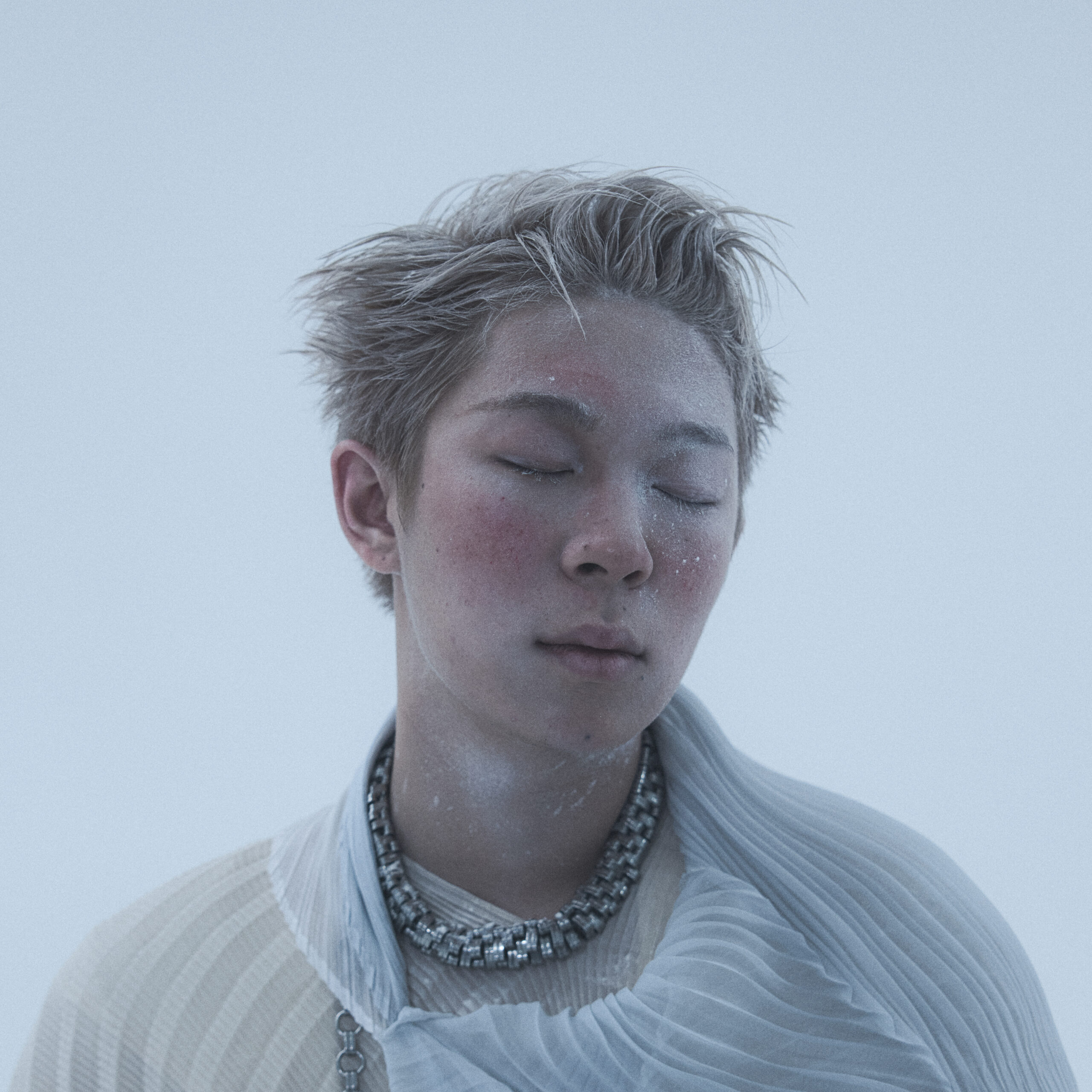
RVRIE’s debut album ‘Reverie feels’ less like a conventional introduction and more like the careful reconstruction of a fractured inner world, and we premiere it here at Music Crowns.
The Beijing-based producer, songwriter, and sound designer, the moniker of Zefan Gao, approaches music with a cinematic sensibility, layering ambient pop and alternative rock into something immersive enough to blur the line between memory and atmosphere. Across the record, nostalgia is not treated as comfort, but as something heavier and more elusive: a force capable of distorting identity as much as preserving it.
That emotional tension defines much of Gao’s songwriting. Though formally trained in classical piano from the age of four, his compositions rarely feel rigid or ornamental. Instead, ‘Reverie’ unfolds with a slow-burning patience, allowing textures to accumulate gradually around its emotional core. Even at its most expansive, there is restraint in the way Gao builds these songs, as though every ambient swell or fractured guitar passage is attempting to hold together experiences that once felt impossible to process in real time.
Much of the album’s emotional weight stems from Gao’s upbringing between two contrasting cultural environments: the rapid modernisation of Y2K-era China and the structured isolation of a Quaker school in the United States. That sense of displacement lingers throughout the record, giving the album an introspective quality that never feels performative. Instead of romanticising the past, Gao examines it closely, confronting nostalgia as both refuge and threat.
Lead single “Dark Waters” captures this dynamic in its most haunting form. Inspired by Kojima’s gaming masterpiece ‘Death Stranding’ and the game’s invisible “Beached Things”, the track transforms those submerged horrors into a metaphor for memory itself, unseen forces pulling quietly beneath the surface.
Sonically, the track mirrors that descent. Contributions from bassist Tim Lefebvre, known for his work on David Bowie’s Blackstar, and jazz saxophonist Nathan Gao add a sense of instability and movement, pushing the song into a fluid space between avant-jazz experimentation, ambient melancholy, and atmospheric rock.
What makes ‘Reverie’ compelling is not simply its conceptual ambition, but the clarity with which Gao executes it. The album never loses sight of the song beneath the production, allowing its emotional themes to land with genuine weight rather than abstraction. In revisiting loss so completely, RVRIE ultimately arrives somewhere unexpectedly cathartic, turning introspection into something vast, transportive, and quietly human.