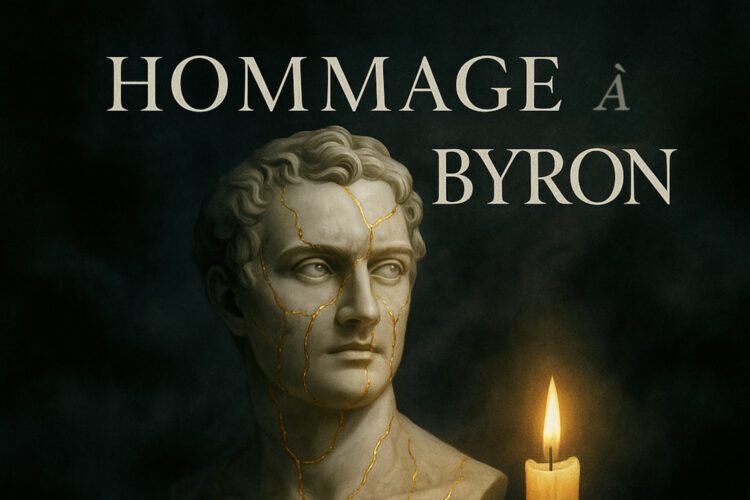
Liz Luceris’ Hommage à Byron is not an EP you simply listen to. It is one you sit with. Cinematic, austere, and emotionally unguarded, the project unfolds like a private confession staged on a grand orchestral canvas. Rooted in neoclassical composition but unafraid of art pop, symphonic metal, and poetic restraint, the release feels less like a debut statement and more like the culmination of years of quiet endurance.
Luceris’ background in classical music and film scoring is immediately apparent. Every arrangement feels intentional, sculpted rather than embellished, with orchestral swells and instrumental textures serving the emotional core rather than overwhelming it. There is a composer’s discipline at work here, but also a deep respect for silence, space, and unresolved feeling. The EP resists easy catharsis, choosing instead to honor tension, grief, and reflection without forcing resolution.
The emotional center of Hommage à Byron lies in its two focus tracks, each revealing a different facet of Luceris’ relationship with literature, voice, and restraint. “I Speak Not” is a towering symphonic metal ballad that carries immense spiritual and emotional weight. Strings, choir, harp, and electric guitar converge in a slow, deliberate build that feels both reverent and unforgiving. Luceris’ vocal performance is striking not because of excess, but because of control. Knowing the song existed for years before her voice could physically realize it only deepens its impact. The performance feels earned, disciplined, and quietly devastating, aligning her with cinematic metal artists like Nightwish and Epica while maintaining a distinctly personal voice.
In contrast, “So We’ll Go No More A Roving” moves inward. Inspired by Byron’s poem and approached through a softer, melodic sprechstimme style, the track drifts like a memory rather than a declaration. Lightly jazzed and understated, it avoids drama altogether. There is no climax, no clear goodbye, only a sense of gentle hesitation. It feels intimate in a way that is rare, as though the listener has stumbled into a moment not meant for an audience.
What ultimately sets Hommage à Byron apart is its emotional honesty. Luceris does not write to impress or to chase genre conventions. Her work speaks from survival, from illness, silence, and perseverance, and that truth is embedded in every compositional choice. The EP’s cinematic scope never feels performative. Instead, it frames deeply human vulnerability with dignity.
As a composer, producer, and storyteller, Liz Luceris positions herself at a compelling intersection of music, literature, and philosophy. Hommage à Byron is a restrained yet powerful body of work that rewards patience and close listening. It is a reminder that some of the most resonant art is not the loudest, but the most unflinchingly honest.
Liz Luceris Online: