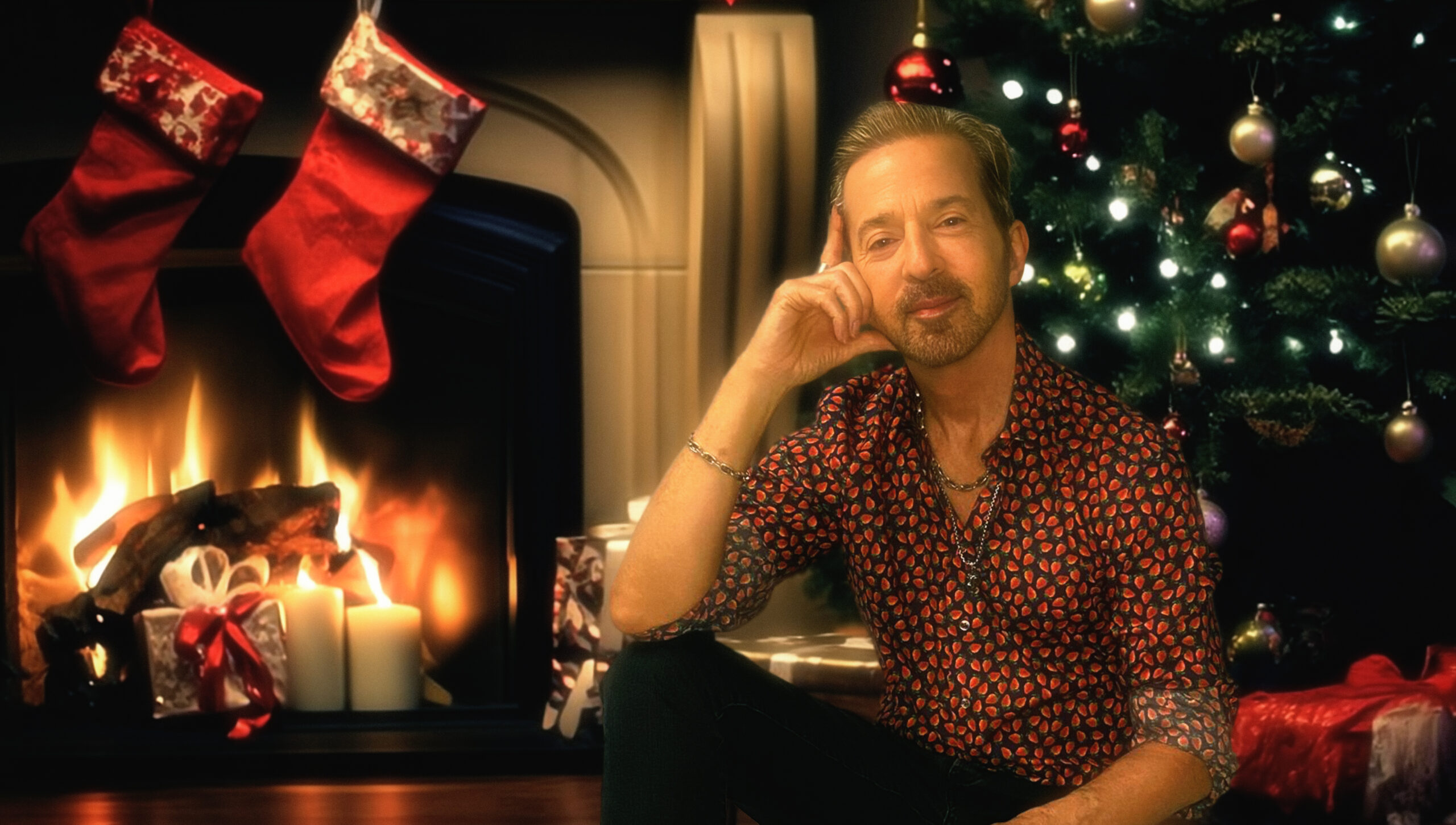
Limahl returns to the festive canon with the re-release of ‘One Wish For Christmas’, a warm, reflective seasonal track that leans into nostalgia without tipping into cliché. Released on 4th December via Christopher Music, the song arrives buoyed by renewed interest, its accompanying video already surpassing 72,000 views, and follows the singer’s well-received comeback reinterpretation of ‘A Horse With No Name’
Rather than relying on bombast or novelty, One Wish For Christmas succeeds through sincerity. Limahl’s unmistakable voice carries a gentle, melodic warmth, framing Christmas not as spectacle but as memory. Lines like “December is that time of year, where memories become souvenirs” act as the song’s emotional anchor, capturing the bittersweet glow of childhood tradition and time passing. Musically, the track favours classic festive textures and an easy, melodic flow that feels timeless rather than trend-chasing.
We sat down with Limahl to learn all about the story behind the Christmas hit, what makes him tick and much more, here are at Music Crowns!
—
‘One Wish For Christmas’ is your only Christmas song. What made this particular track feel worthy of a re-release now?
The single was first released during the pandemic, in December 2020 and I’ve promoted it every Christmas since. Each year, streaming numbers continue to rise and awareness of the track grows. It currently stands at 72,000 YouTube views, with 99.9% positive comments.
Using a theatre metaphor, One Wish For Christmas is presently “running” off-Broadway — or, as we say in the UK, “on the fringe” — and I intend to keep promoting it until it transfers to Broadway or the West End.
Do you feel Christmas songs carry a different emotional responsibility compared to standard pop releases?
Absolutely — because, as the lyric says, “December is that time of year where memories become souvenirs.” It’s a season when work colleagues gather at Christmas parties, old friends reconnect, families come together and many quietly remember loved ones they’ve lost while revisiting old photographs. Christmas is charged with this powerful contrast of joy and melancholy.
What was the recording and writing process like for this one?
I met my co-writer Jon Nickoll at the Savoy Hotel in London, where he regularly plays piano and sings classics from the Great American Songbook. We spoke about getting together for a songwriting session and quickly discovered, conveniently, that we lived just around the corner from each other in North London. One sunny afternoon in June, we met with no pressure and no deadline, simply throwing ideas around. When I suggested writing a Christmas song, we both laughed and agreed it would be an almost impossible task — which, of course, only made the challenge more appealing. I was keen to avoid familiar Christmas clichés like Santa or sleigh bells, so we searched hard for a fresh angle. Once we landed on the idea of a couple taking a Christmas city break, it felt natural to set the story in London — a city I know intimately after more than 40 years of living here. Music producer Ian Curnow then came on board, adding his own magic touches to the arrangement and bringing the music fully to life.
With the video already gaining a lot of views, were you surprised by how strongly the song connected with listeners this time around?
When I saw the final edit of the video from directors The Bashford Twins, it genuinely took my breath away. It brings together three things I’m passionate about: theatre, dance and, of course, London at Christmas. I believe this combination of the track and the visual storytelling connects strongly with audiences, as so many people can relate to the idea of escaping for a Christmas city break.
Looking back across your catalogue, how has your approach to songwriting evolved since your early days with Kajagoogoo?
Songwriting is a bit like learning to ride a bike — once you’ve mastered the craft, you never really forget it. That said, nothing is ever guaranteed and you can easily spend an hour or two hitting a creative brick wall. Writing with Kajagoogoo was a highly collaborative process, usually involving four musicians, which is a delicate balancing act: recognising the good ideas, discarding the weaker ones, and doing so without offending anyone — no small task. Writing alone can be quite solitary, so collaborating with one or two others is especially enjoyable. It allows space for conversation, shared music stories and the inevitable tea-break natter. In truth, my songwriting approach hasn’t changed all that much over the years. An idea can still emerge from a musical riff, a rhythm, or even a single phrase or lyric.
You’ve remained incredibly active on stage, from Pride in Cologne to charity galas – what does performing live still give you creatively and emotionally?
From a young age, I dreamed of becoming a singer or being involved in music in some way. Not everyone gets the chance to see their childhood dream come true and I constantly remind myself how fortunate I am — and how important it is to respect that privilege. There’s nothing quite like walking out in front of a live audience and being met with cheers and applause; it never loses its magic. Creatively, I set a high bar for myself — vocally, visually, and physically. Great footballers, for example, don’t simply walk onto the pitch and perform at their best; they train relentlessly throughout the week. Live performance is no different. By the time I step on stage, there has usually been a great deal of preparation behind the scenes. I often liken it to the old saying: like a swan, I appear calm and graceful on the surface, while underneath I’m paddling furiously.
And finally, what would you hope listeners feel or remember when ‘One Wish For Christmas’ becomes part of their own holiday traditions?
Every year, when I hear my favourite Christmas songs, it feels like a visit from an old friend. If One Wish For Christmas can evoke even a fraction of that feeling, then my mission is accomplished.