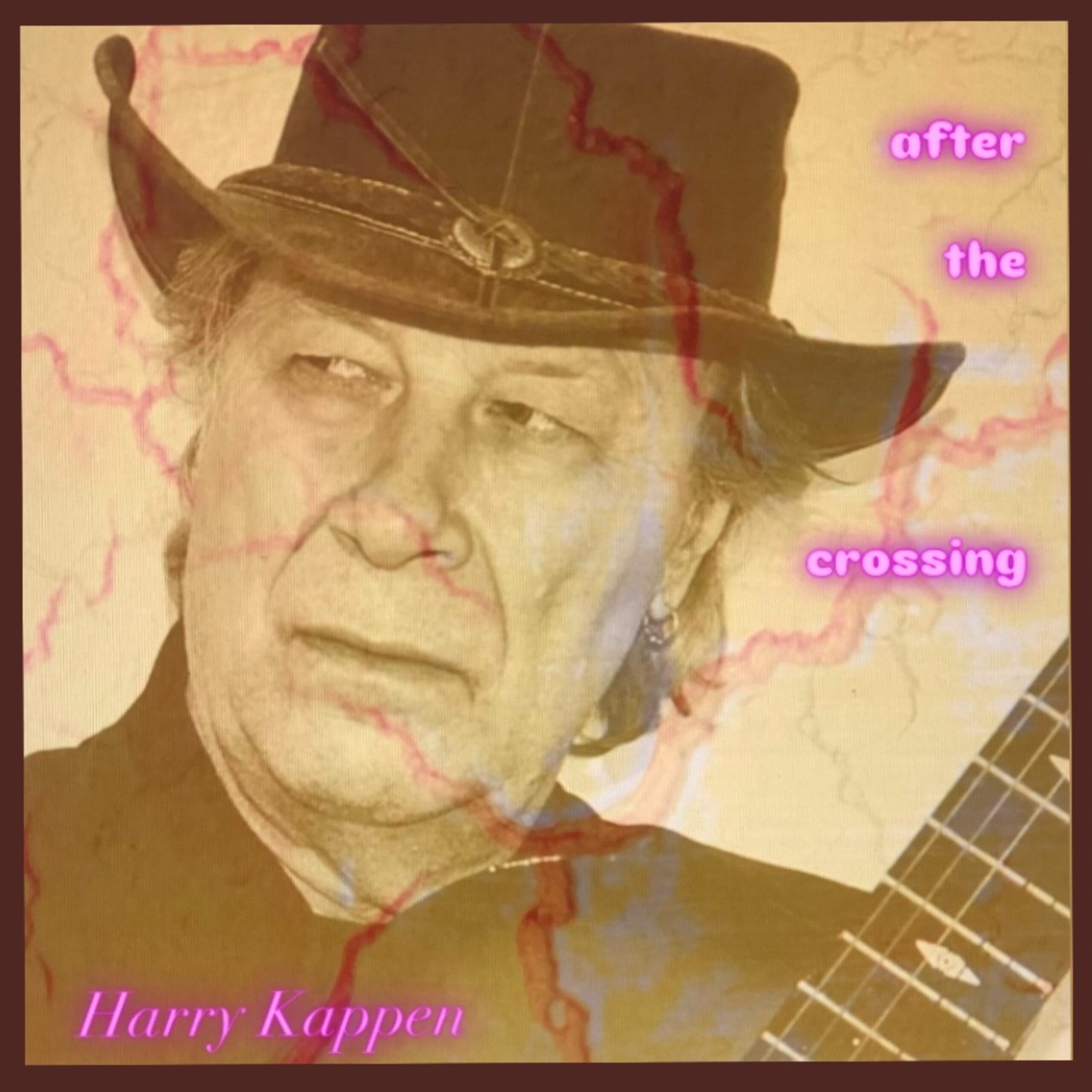
Harry Kappen’s After the Crossing isn’t just an album—it’s a man dragging his amplifiers across an ocean, plugging them into a new voltage, and daring the sparks to fly. You can hear the salt in it. You can hear the doubt. You can hear the love that made him pack up Groningen and land in Mexico with a guitar case full of questions and a head full of melody.
The opener, “Balance,” comes in like a calm sermon before it turns into a philosophical bar fight. Kappen sings about left and right, black and white, truth turning fake—yeah, all the stuff we’re choking on daily—but instead of screaming slogans, he digs for the messy middle. It’s not protest music with a raised fist; it’s protest music with a raised eyebrow. And that’s more dangerous. The groove is sleek, almost deceptively polite, but underneath it is a guy clearly fed up with the noise machine of modern life.
Then he pivots. “No Delays” feels like it was written at 3 a.m. in a hotel room with the curtains half open and the future knocking at the door. It’s restless and lean, humming with that specific brand of panic-excitement you get when you realize you’re about to blow up your old life and call it destiny. Kappen plays nearly everything on this record, and you can feel that hands-on urgency—this isn’t committee rock, it’s kitchen-table conviction.
“We’re Going to the Max” barrels in like a love-drunk manifesto. Crossing oceans for romance? Screaming names from airplanes? It should be ridiculous. Instead, it’s disarmingly earnest. The guy believes it. That’s the trick. You don’t roll your eyes—you nod along, because in a world of ironic detachment, sincerity feels rebellious.
And then there’s “Distant Shore,” which might be the album’s emotional gut punch. Kappen steps outside his own migration story and looks at refugees riding trucks and waves toward uncertain futures. The song swells and shudders, cinematic without being pompous. It’s Bowie’s ghost flickering in the background, but Kappen doesn’t imitate—he channels.
By the time we hit “The Real Thing” and “Good Samaritans,” he’s slicing into fake smiles and plastic heroism. He wants honesty. He wants mud on your shoes. He wants humanity without the filter. There’s a scrappy moral core here that feels almost unfashionable—which is exactly why it works.
The closer, “Now,” strips everything back. Suddenly the storm quiets. It’s just breath and fragility and the realization that all this noise, all this crossing, all this loving and arguing—it’s temporary.
After the Crossing is messy, idealistic, and occasionally overwhelming. Good. Rock music should be. Harry Kappen isn’t offering comfort food. He’s offering confrontation wrapped in melody. And sometimes, that’s exactly what we need.
–Les Banner