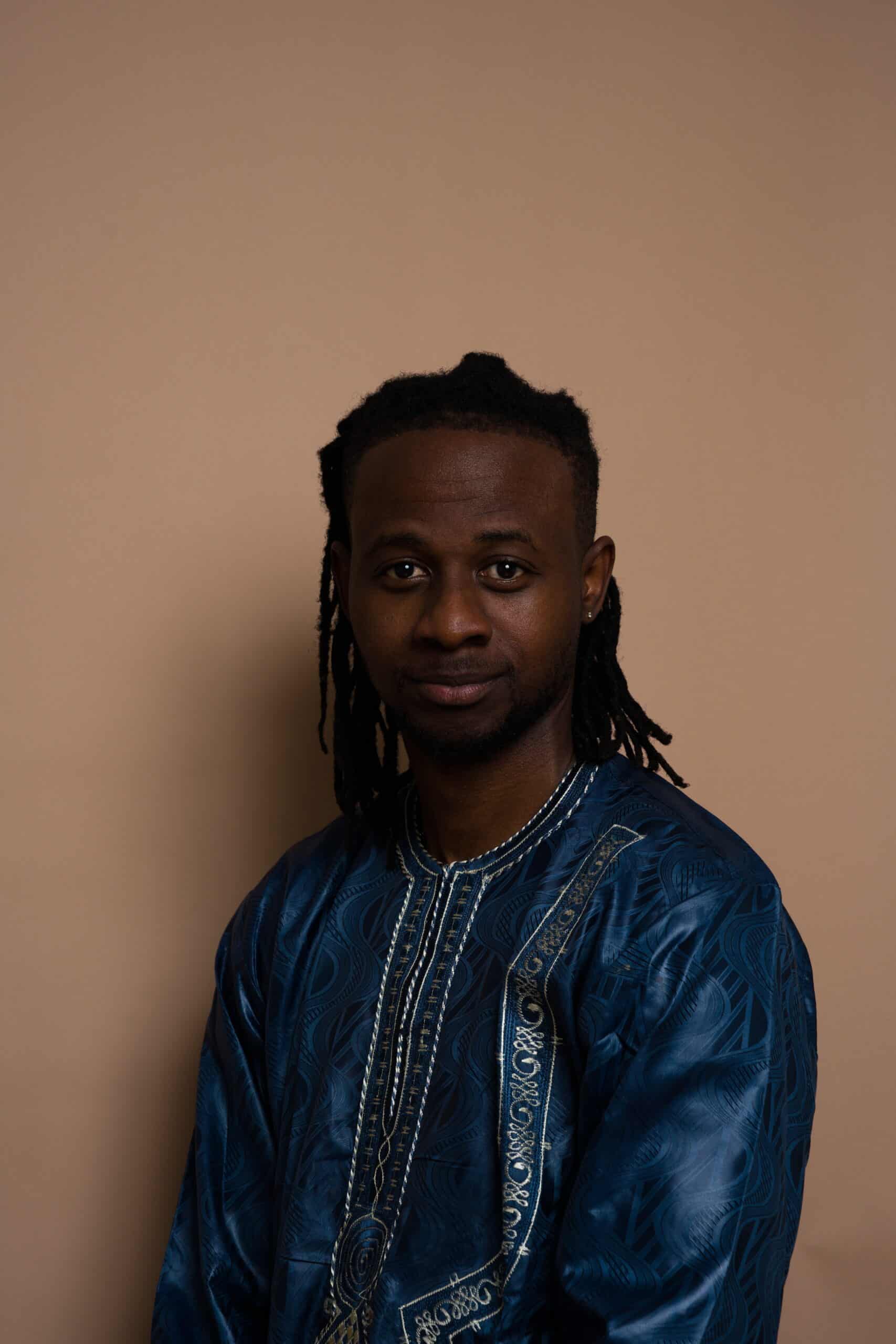
Der Oscar Effekt is an artist who moves between worlds — between Europe and Africa, tradition and innovation, memory and evolution. With his new project three stone fireside, vol. 1, the Cameroon-born, Europe-based rapper, singer, and storyteller returns to the roots that shaped him, both musically and spiritually.
Across three stone fireside, he weaves English, Pidgin, French, Camfranglais, and Mokpwe into songs that explore love, struggle, gratitude, and identity — all grounded in the wisdom of his elders and the pulse of his culture. It’s music that bridges generations and geographies, carrying listeners back to the glow of the fire that, as he puts it, “keeps us warm before we shine for the world”. We caught up with him following this new release.
Before we can shine for the world, we must understand the fire that keeps us warm. I’ve always incorporated elements of my culture into my music, that’s what makes my sound different, some might even say unique.
While creating three stone fireside, vol. 1, I kept seeing this image in my mind, something that took me back to my childhood: sitting around the fireside with my mum, my siblings, and my cousins. Cooking, laughing, cracking jokes, sometimes even arguing. It was a moment of pure connection.
I had this deep feeling that I wanted to create a project that captured that same communal warmth — the laughter, the honesty, the life lessons. This album felt like a gift I had in me for a long time, and it finally felt like the right time to bring it to life.
2. You describe the fireside as a place of warmth, wisdom, and connection — how did you translate that atmosphere into sound across the album?
It took a few key ingredients, mixed in the right proportion.
First, the production. Many of the beats were created from scratch by producers in Cameroon who truly understood my vision — not just musically, but culturally. They knew how to bring that feeling of home into the sound.
Then, the languages. I switch between English, Pidgin, French, Camfranglais and Mopkwe, the same way we switch naturally when we talk back home. It’s part of the warmth, the authenticity.
And finally, I wanted to make it personal. In songs like kadji beer (track 2), you can hear my late grandmother’s voice at the start but also at the end of the song, and in track 3 – màléwà naɲô – my dad sings the pre-chorus in my native language, Mokpwe. These little details connect generations, it goes beyond vibes, it’s somewhere spiritual – that’s the true fireside spirit.
3. The record moves through themes of love, struggle, betrayal, and gratitude. Was there a moment in making the album that felt like a personal breakthrough for you?
There were a few moments during the process of creating three stone fireside, vol. 1 when I thought to myself, this might be the best album I’ve listened to this year. Maybe that’s confidence, maybe that’s delusion — but that’s how it felt.
Recording track 2 – kadji beer was definitely one of those breakthrough moments. The beat was created entirely from scratch — a two-part instrumental, about 4 minutes and 35 seconds long. I rapped and sang in multiple languages, and the energy that came out during that session was different.
But what made it truly special was the moment I decided to include a recording of my late grandmother’s voice — part of a conversation we had in the presence of my siblings and parents almost ten years ago. Hearing her again, blending her presence into the music — that was powerful. It felt like everything came full circle.

4. You’ve said this is your most personal project yet. What did you learn about yourself while creating it?
Making this album reminded me that being different isn’t something to hide — it’s something to embrace.
I leaned fully into that this time. Incorporating elements of my culture, traditional Cameroonian sounds, singing in multiple languages — it all felt natural and true to me.
It also showed me how much I’ve grown — both as an artist and as a person. I’ve become way more confident in my creative instincts, more comfortable with my vulnerability, and more grounded in who I am.
5. Each of your albums — Kryptonite, Neige et Poussière, and now three stone fireside — feels like a chapter in a bigger story. How does this one complete or expand that narrative?
Kryptonite captured a chapter of my life where love and feelings of freedom were the deeply felt in my soul. This is felt in the album. Neige et Poussière was me soul-searching — trying to understand the duality of living between Europe’s snow and Africa’s dust, the inequalities, the unanswered questions and what that means for identity.
With three stone fireside, vol. 1, it feels like I’ve come home. It’s Der Oscar Effekt returning to the roots that shaped him — the warmth, the stories, the values. It’s like paying homage to the ingredients that made me who I am.
Before we can shine for the world, we need to understand the fire that keeps us warm.
That’s what this album does — it pulls listeners closer to that fire, to the place where Der Oscar Effekt was made.
6. You balance modern production with traditional African rhythms — what drives you to blend the old and the new so seamlessly?
It’s just who I am. The album — like me — isn’t fully traditional, but you can always feel that traditional pulse in it.
At the same time, tracks like hot & cold (6) or bad man into mumu (7) bring in modern Afrobeats and reggae energy.
That balance is important to me. It’s the bridge between where I come from and where I’m going. Between heritage and evolution.
7. If you had to pick one song on the album that feels closest to your heart, which would it be and why?
kadji beer, without question.
It’s a unique production — two beats in one, layered with meaning. The message starts with “the journey of a thousand miles begins with a step” and moves through resilience, growth, and self-affirmation.
Hearing my grandmother’s voice at the start, and again throughout the song and at the end, makes it even more special. It’s emotional and spiritual — like bringing her back to life through music. Every time I listen, I feel both proud and humbled.
8. three stone fireside, vol. 1 feels like a homecoming of sorts. What do you hope listeners feel when they sit by your “fireside” and experience the project from start to finish?
More than anything, I want listeners to feel something.
I always say I don’t make music — I create vibes. And if you listen to my music and don’t feel something, then I didn’t do my job properly.
I want people to feel the tradition, the warmth, the melody — but also the emotion. Love, hard work, betrayal, resilience.
This album isn’t something to rush through. It’s meant to be experienced slowly — like sitting by a fire and letting each story unfold.