The DSCH—Shostakovich Ensemble is expanding its recording catalogue with a new release dedicated to two major composers of the Romantic period. Featuring music by Franz Schubert and Antonín Dvořák, the album reflects the ensemble’s continued commitment to exploring chamber music through international collaboration and carefully selected repertoire.
Released by LAWO Classics, the recording combines Schubert’s Piano Quintet in A major, D. 667, commonly known as “The Trout”, with Dvořák’s Piano Quartet No. 1 in D major, Op. 23.
For an ensemble with an established history of exploring classical repertoire, the project represents another opportunity to bring familiar compositions to contemporary audiences.
A Lisbon Ensemble with an International Perspective
Founded in 2006 by pianist Filipe Pinto-Ribeiro, the DSCH—Shostakovich Ensemble has developed a musical identity built around collaboration and a broad approach to chamber music.
Based in Lisbon, the ensemble brings together musicians with international performance experience. Its repertoire spans different periods and styles, allowing it to explore both established masterpieces and less frequently performed works.
The group’s name also reflects its connection to the music of Dmitry Shostakovich, whose chamber compositions have featured prominently in its recording history.
Its 2016 release dedicated to Shostakovich’s complete chamber music for piano and strings was an important part of that journey. A subsequent recording in 2021 explored Beethoven’s Piano Trios Op. 11 and Op. 38.
The latest project continues this interest in presenting significant works through the distinctive format of chamber performance.
Schubert and Dvořák Form the Centre of the New Album
The selection of Schubert and Dvořák creates an interesting connection between two influential composers.
Schubert’s Piano Quintet in A major is widely recognised for its melodic character and unusual instrumentation. The addition of a double bass gives the composition a distinctive sound, while its fourth movement develops variations on the melody of Die Forelle.
Dvořák’s Piano Quartet No. 1 offers a contrasting musical experience. Written in 1875, it combines expressive melodies with energetic rhythms and elements associated with Czech musical traditions.
Together, the compositions provide a programme that demonstrates the variety of Romantic chamber music.
Five Musicians Bring the Programme Together
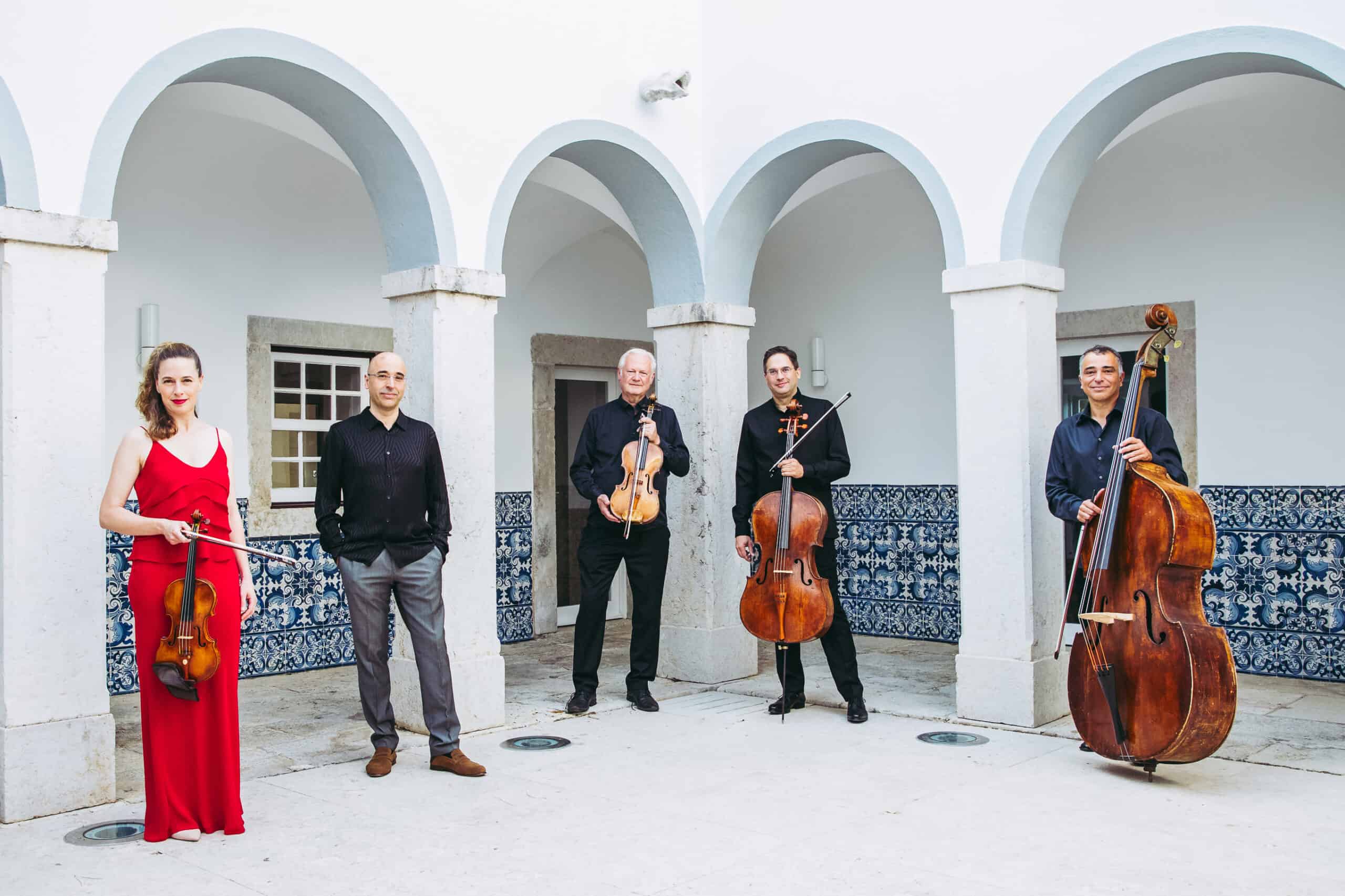
The recording features Filipe Pinto-Ribeiro on piano, joined by Esther Hoppe on violin, Lars Anders Tomter on viola, Christian Poltéra on cello and Tiago Pinto-Ribeiro on double bass.
Each musician contributes a different perspective to the performances.
The interaction between the instruments is particularly important in chamber music, where musical interpretation depends on communication and balance rather than the direction of a conductor.
This collaborative element is central to the ensemble’s approach and helps give the recording its character.
Inside the New LAWO Classics Recording
The album was recorded at Reitstadel in Neumarkt in der Oberpfalz, Germany, between 26 and 29 October 2025.
Vegard Landaas took responsibility for production, while Thomas Woldén handled balance engineering and mastering.
The release is available through LAWO Classics under catalogue number LWC1423. It also received support from the Portuguese Republic’s Directorate-General for the Arts.
These production details reflect the international nature of the project, bringing together musicians, recording professionals and cultural support from different European backgrounds.
A Continuing Commitment to Classical Repertoire
With this latest release, the DSCH—Shostakovich Ensemble continues to develop a discography centred on important works from the classical tradition.
The combination of Schubert and Dvořák provides an opportunity to revisit two familiar compositions through the ensemble’s collaborative approach.
For listeners interested in chamber music, the album offers another chance to experience the expressive possibilities of the piano and string instruments working together.
It also reinforces the ensemble’s ongoing interest in keeping established classical repertoire connected with contemporary audiences.