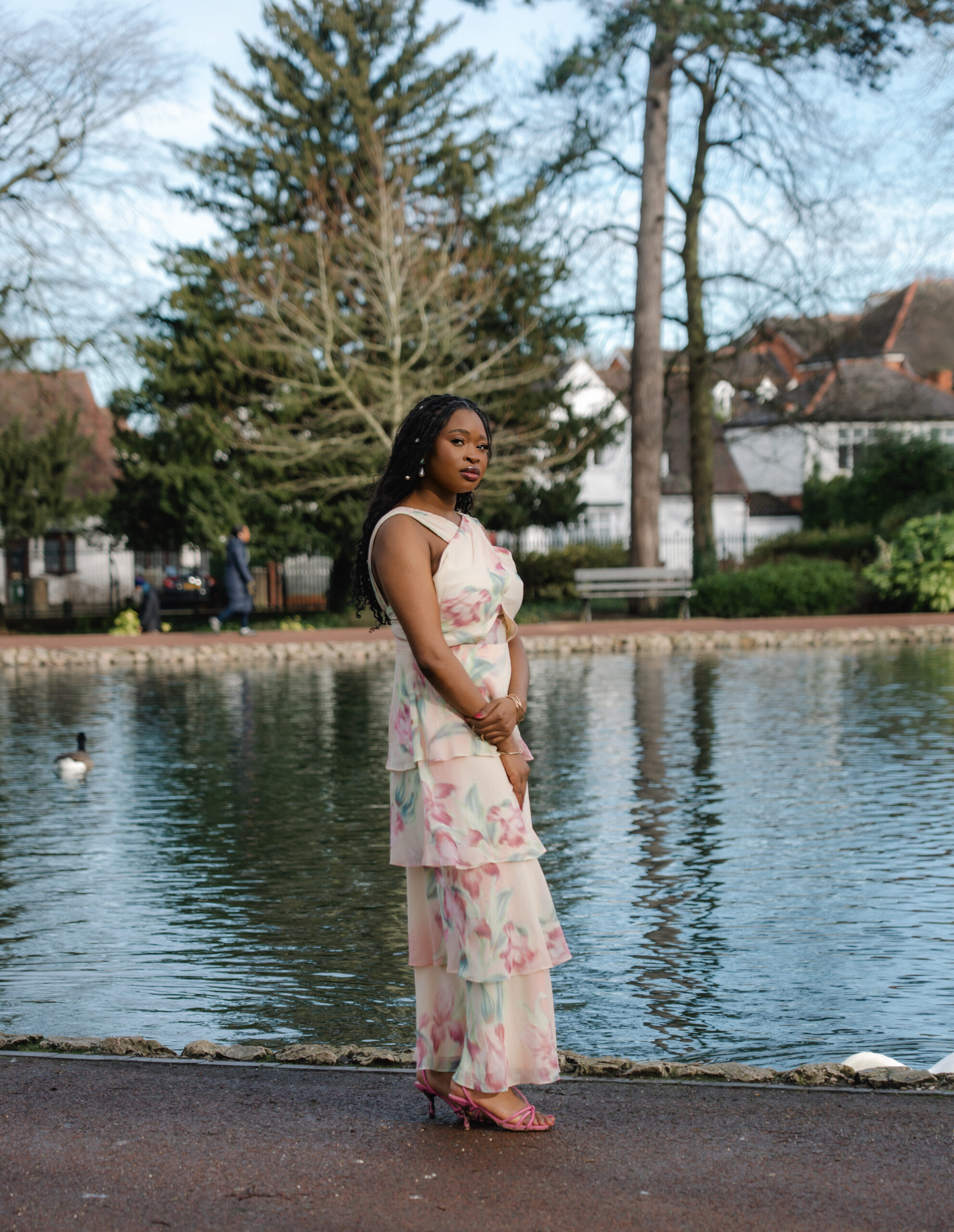
In a musical landscape that often rewards volume, urgency, and instant impact, Brenique Adams takes a different route with Oasis. Rather than demanding attention, her five-track EP invites listeners to slow down, sit with themselves, and actually feel something.
There’s a subtle confidence in that approach. Oasis doesn’t rely on dramatic production shifts or overly polished hooks to make its mark. Instead, it builds its identity through restraint. The arrangements are warm and open, giving Brenique’s voice room to lead, while her songwriting leans into clarity over complexity. The result is a project that feels deeply personal without ever becoming inaccessible.
The emotional core of the EP reveals itself gradually, and that’s part of its strength. Brenique doesn’t rush to resolution as she allows space for doubt, reflection, and quiet rebuilding. When those moments of uplift do arrive, they feel earned rather than imposed. It’s a delicate balance, and one she handles with surprising ease.
“Light” stands as the defining moment of the project, not because it’s louder or bigger than the rest, but because it encapsulates the EP’s emotional journey. There’s a sense of release in how the song unfolds, moving from introspection toward something more expansive. Brenique’s vocal performance here is particularly striking; controlled yet expressive, carrying both vulnerability and quiet conviction.
What makes Oasis stand out is its sense of purpose. While its themes are rooted in faith, the project never feels exclusive or narrowly framed. Instead, it taps into something more universal: the need for reassurance, for identity, for grounding in uncertain moments. Brenique approaches these ideas with a light touch, avoiding clichés and allowing her sincerity to carry the message.
Sonically, the EP sits at the intersection of pop, soul, and gospel, but it’s less about genre-blending and more about cohesion. There are traces of Whitney Houston’s emotional clarity, Tori Kelly’s vocal precision, and India Arie’s warmth, yet Brenique never feels overshadowed by her influences. She uses them as a foundation, not a blueprint.
If anything, Oasis feels like an artist choosing to trust her instincts rather than chase expectations. There’s no sense of overreaching here, just a clear understanding of what she wants to say and how she wants it to feel. That clarity gives the project its quiet impact.