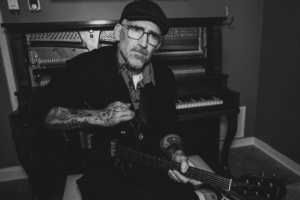
Few bands wear their road-worn history as proudly as St. Louis’s The Fighting Side. Built over a decade of touring in busted vans, playing packed rooms and empty halls, and enduring the slow churn of lineup changes, the band’s latest single, “Sinner”, feels like the distilled essence of everything they’ve lived through. It’s not polished nostalgia; it’s honky-tonk rock and roll tempered by years on the road, sharp enough to cut but grounded in earned experience.
“Sinner” is a meditation on inevitability. Written nearly twenty years ago, the song wrestles with cycles we inherit, the tension between wanting to change and recognizing how stubborn patterns can be. It’s a song that carries hope but never avoids surrender, layered over riffs that pull from country, southern rock, blues, and a hint of punk urgency. What hits most is how unhurried the band sounds: there’s no chasing trends, no smoothing of edges, just clarity born from experience.
We sat down with The Fighting Side to learn all about the new single, what makes them tick and much more, here at Music Crowns!
—
Hello The Fighting Side! How are you doing guys?
Doing great, thanks for having us!
Tell us all about your new single “Sinner.”
Oh man, we’re really excited about this one. Seth actually wrote the song years ago, and we kept revisiting it trying to find the right shape for it with different lineups. It never quite landed the way we wanted until this current group came together and suddenly it just clicked. The song deals with generational trauma, pushing through adversity, and sometimes just the weight of it all getting heavy. I think a lot of people will recognize themselves in it. It’s also the first recording we’ve done with Marc Levitt on lead guitar and Merril Barden on drums. Paul Johns played bass on the track and he absolutely rips on this one. We’re really proud of how it turned out.
Who are your biggest influences as a band?
That one’s always tough because we all come from pretty different musical backgrounds. Honestly a lot of our influence comes from the people around us. Friends on the road, bands we share bills with, musicians we admire. You pick up little tricks, little ideas, different ways of approaching things. Being around that community keeps you learning all the time.
You’ve been described as a band “built the slow way.” Looking back, what are some key moments on the road that shaped The Fighting Side?
There are a lot of moments, but the biggest thing is the relationships. This band has really been built person by person over time. Every band we’ve played with, every friend we’ve made on the road, every fan who keeps showing up for us becomes part of that family. We’ve played plenty of packed rooms and just as many empty ones, and the thing that keeps it all going is those connections. If we had some giant radio hit maybe the audience would have come all at once, but instead it’s been built brick by brick over the last decade.
Southern rock, punk, blues, and classic country all show up in your sound. How do you blend those influences without getting stuck in nostalgia?
If that’s what people are hearing then hell yeah, we’re doing something right. For us it really just comes down to chasing moments in a song that get us excited. Sometimes that’s an unusual chord change. Sometimes it’s just a straight four on the floor beat with a big rock and roll hook. Because we all come from different musical worlds, those instincts collide in interesting ways. Hopefully that pushes things forward a little. But honestly we’re not afraid of nostalgia either. If something feels good, we’re going to lean into it.
How do you approach balancing restraint with impact in your playing?
A lot of that comes from trust. Everyone in this band knows how to play big, but sometimes the most powerful thing you can do is hold back and let the moment build. If the rhythm section is locked in and the dynamics are right, you don’t have to fill every inch of space. When the band finally does open up, it hits a lot harder.
How has performing in packed rooms versus empty rooms over the years shaped your sound and stage presence?
Empty rooms teach you a lot about who you really are as a band, and as individuals. It forces us to play to the strength of our connection and to the songs rather than being able to feed off the energy of the crowd. Then you have to light the same fire as you8 would in a room of 500. Those nights build the muscle that makes the big shows feel natural instead of overwhelming. Regardless of the crowd size, we just like to laugh and have a good time on stage. I think we do a great job of playing the same caliber show regardless of who’s there.
Your music is described as “built to be played loud in real rooms.” How do you approach translating that energy into recordings?
We really try not to overthink it in the studio. We record live, mostly, and a lot of the energy comes from people actually playing together in a room instead of assembling everything piece by piece. Imperfections are part of the personality of the band. If it feels alive when we’re tracking it, that usually translates better than something that’s technically perfect but kind of sterile. Outside of that, we count on some really great folks to find the right sounds that really translate that “big” sound to the board. Nick Bifano, who recorded this one, has such a great ear for this kind of sound. We love recording with him out at Harbor Studio.
What does the road ahead look like for the band? Are there particular milestones or goals you’re aiming for in the next year or two?
Right now we’re just focused on getting music out into the world and playing it live as much as we can. The goal has always been simple. Keep writing songs we believe in, keep showing up for the people who show up for us, and keep building this thing the same way we always have. One room at a time. You’ll definitley see us keeping on that same path over the coming years. We’ve been at it for awhile, but trust, we’re just getting started.