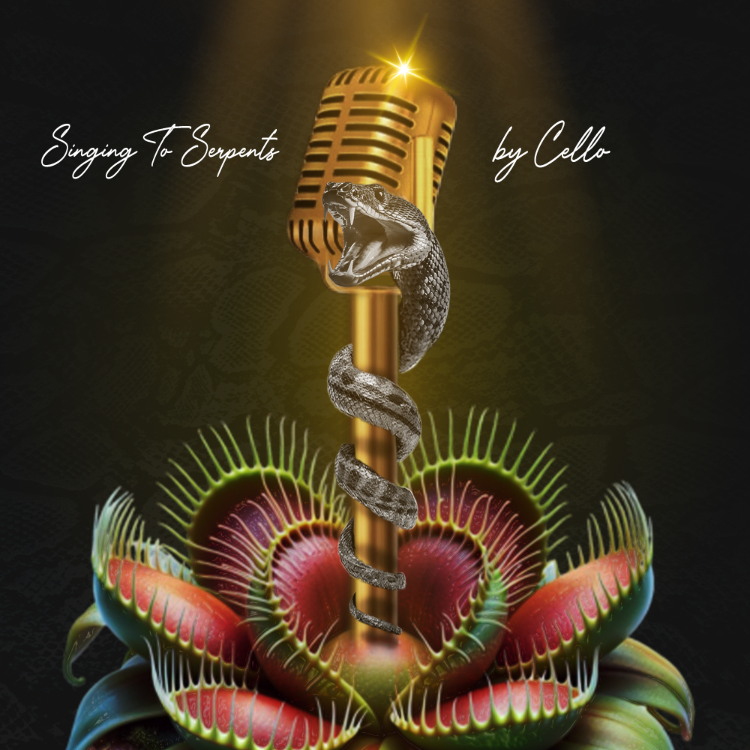
Rock criticism has always had a soft spot for artists willing to expose the messy mechanics of being human. With Singing to Serpents, Cello—born Marcello Valletta—steps firmly into that tradition, delivering a nine-song collection that wrestles openly with identity, love, ego, faith, and the uneasy quiet that follows emotional chaos.
Cello arrives at music through storytelling. A seasoned actor and published poet, his instincts lean toward narrative confession rather than slick pop structure. That sensibility shapes the entire album. Singing to Serpents isn’t designed as a set of radio-ready singles—it plays more like a diary written in rhythm, where vulnerability and bravado exist side by side.
The opener, “Stay Here,” immediately sets the emotional stakes. It’s a song about desire and uncertainty colliding at full speed. The narrator is caught between reckless confidence and deep vulnerability, swerving between romance and emotional collapse. It’s messy in the way real relationships often are—unpredictable, intense, and occasionally destructive.
That tension runs throughout the album.
“Elevate” pushes forward with restless ambition, pairing icy imagery with philosophical reflection about power, love, and self-worth. Cello’s delivery carries a mixture of swagger and unease, suggesting someone trying to convince himself as much as his audience.
Then comes “Sucks to Be Used,” which strips away the pretense and leans directly into confrontation. The central refrain—“It’s hard to be me, but it sucks to be you”—feels intentionally abrasive. But beneath the bitterness lies a sense of wounded pride. It’s less about cruelty than about the damage left behind when relationships collapse under their own emotional weight.
The album’s most revealing moments arrive in “Pray” and “Faith.” These tracks shift the focus from romantic conflict to spiritual struggle. In “Faith,” Cello repeats the line “I need strong faith in my abilities,” turning it into a mantra that captures both confidence and self-doubt. It’s the sound of someone grappling with identity—searching for stability in a world that often feels uncertain.
“Cravings” offers one of the record’s more atmospheric moments, capturing the intoxicating pull of desire and emotional dependency. Meanwhile, “Full Moon” leans into darker imagery, framing love as something volatile and transformative. The song’s tone suggests that emotional intensity can be both exhilarating and dangerous.
By the time the album reaches its closing track, “Sleeping,” the energy softens. The bravado fades, replaced by a sense of reflection and quiet vulnerability. It feels like the aftermath of the emotional storms that dominate the earlier songs—a moment of calm after the chaos.
What ultimately makes Singing to Serpents compelling is its commitment to honesty. Cello doesn’t try to present himself as a flawless narrator. Instead, he exposes contradictions—ego alongside insecurity, longing alongside resentment, faith alongside doubt.
That willingness to reveal the complicated truth about human emotion places Cello within a long tradition of artists who understand that music isn’t just entertainment—it’s exploration.
Singing to Serpents may not offer tidy conclusions, but it succeeds in something more important: it asks real questions about who we are when the noise fades and we’re left alone with ourselves.
–David Marshall