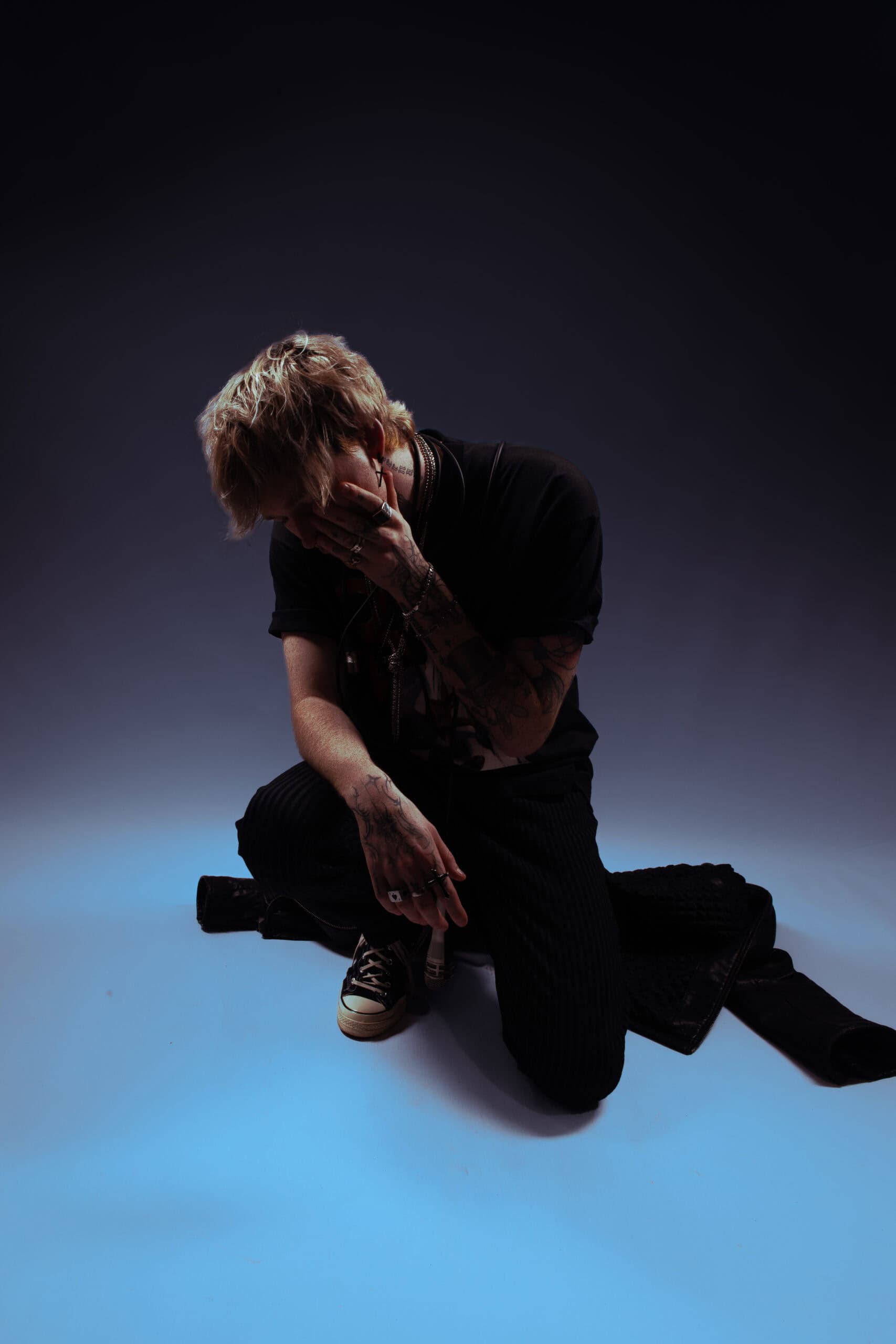
Elijah Cruise has a way of turning shadows into something cinematic. The Tennessee-born alternative artist has built a reputation for blending raw emotion with a darkly nostalgic sound, weaving together rock, electronic, and indie influences with his unmistakable vocals. His latest single, “Dark Romance”, dives into the beauty and chaos of loving someone completely not just their light, but their hidden corners too.
Raised in Pigeon Forge and largely self-taught, Cruise approaches music with an almost filmic perspective: imperfect takes, raw textures, and lyrics that feel like confessions caught on tape. It’s a style that has already resonated worldwide, from viral hits like “Chérie” to deeply personal tracks like “Suicide In Her Head”. Now, with “Dark Romance” out and a U.S. tour underway, Cruise continues to carve out a world where love, darkness, and vulnerability collide.
I caught up with Elijah to talk about embracing shadows, leaving imperfections in the music, and why his songs often feel like scenes pulled straight from a movie.
“Dark Romance” explores loving someone’s shadows. How do you balance embracing someone’s darkness while staying true to yourself?
I think the key is finding someone whose shadows complement your own. It’s not about changing or fixing each other—it’s about both people embracing the parts you might usually hide. To me, the most beautiful thing is being fully seen, shadows and all, and still being loved.
If this song were a movie scene, what would be happening visually while it plays?
I always imagine songs as movie scenes. For “Dark Romance,” it feels like the end of Fight Club—that moment where the buildings collapse and everything is unraveling, but there’s this strange beauty in the chaos. It also reminds me of a scene where everything has come full circle and you’re driving into the night with the radio blaring, feeling both free and destroyed at the same time.
You taught yourself to write and produce in a basement. What’s the most unconventional trick that ended up in a track?
I started producing on Ableton because that’s what I could get as a kid, and I’ve always approached it in my own way. A big part of my process is leaving in the “imperfect” demo elements. For example, the acoustic guitar in “Dark Romance” is literally the first and only take—I didn’t rerecord it, even though if you solo it, you can hear my dog barking in the background. Same thing happened with “Chérie”—the verses are just the scratch demo vocals I recorded while writing, but the vibe was so good I didn’t want to lose it. I treat production like sketching—I’ll leave the rough lines in if they feel real. I’m always chasing those raw, imperfect but genuine little moments.

Do you approach songwriting genre-first or emotion-first?
Always emotion. I don’t really think in genres when I write. Honestly, no two of my songs sound exactly alike, because I’d get bored if they did. I follow whatever feels exciting in the moment, take risks, and trust that the common thread will always be me.
Growing up homeschooled in Pigeon Forge, was there one song or artist that shaped your sound today?
There were so many. I grew up in a religious household, so early on it was mostly ’80s artists and bands like Relient K, Switchfoot, and Anberlin. But once I started sneaking in other music, I discovered Paramore, My Chemical Romance, and The Killers—and it felt like I was in a candy store. Every new artist was this rush of inspiration. That feeling of discovering music that cracks you wide open—that’s still one of my favorite things.
Fans often resonate deeply with your songs, what’s the most surprising fan reaction you’ve received?
The most moving thing is when people tell me my music has saved their life. That will never stop being surreal or humbling. On the lighter side, I’ve had fans ask me to handwrite lyrics for tattoos, which I think is wild but also really beautiful. I’m a huge fan of tattoos, so I’m always honored when someone wants my words inked into their skin forever.
If “Dark Romance” had a color palette, what colors would it be and why?
I’m mildly colorblind, so I’ve always gravitated toward blacks and deep, dark reds. That feels very “Dark Romance” to me—bold, dramatic, a little dangerous. But sometimes my songs lean into darker shades of blue too, like with “Suicide In Her Head.” I think my music lives in those in-between tones—moody, raw, and cinematic.
Darkness and romance are central to your work. Do you see light as equally important in your songwriting, or is shadow your preferred canvas?
I think both matter, but I don’t sit down and think about it too much. I write hundreds of songs a year—some light, some dark—and it all just flows. I’ve been writing every day since I was a kid, so it feels more instinctual than intentional. That said, I do find myself releasing more of the darker songs. Maybe that’s because they feel more powerful to me, or maybe that’s just where I naturally gravitate.